

 Back to the overview


Your selection
We offer up to 3 free material samples. The samples come in 16 x 25 cm cut-outs.
Request samples
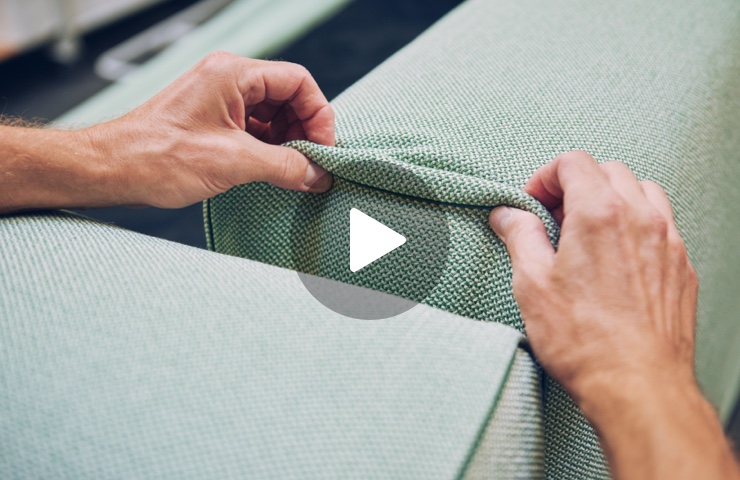
A modern interpretation of the classic twill weave – lively, with a fine grain and special colour and yarn effects. Homely geometry meets confident textile design to radiate lightness. Combining two to four yarn colours produces a sophisticated multicolour effect. The colour palette ranges from calm, slightly nuanced tones to bold colour contrasts. Multiple-twist merino wool yarns in worsted quality ensure high durability and longevity. The high virgin wool content supports the rapid regeneration of the textile – it is elastic and pressure marks disappear quickly. Wool is naturally dirt-repellent and adapts perfectly to its environment.
 shrimp
 apricot
 grapefruit
 rapeseed yellow
 bronze
 walnut brown
 muscat brown
 havana brown
 greige
 caramel lilac
 orange lilac
 glacier blue
 ocean blue
 cactus green
 thyme green
 steel grey
 aluminium grey
 light grey
 carbon grey
You have reached your maximum order quantity
Information & Downloads

9229
shell
95% New wool
5% Polyamide
90


-
Durability
60.000Rubbing is a measure of the durability of a fabric. For heavy use, the Martindale durability should be over 20,000 abrasion cycles, while for normal daily use, a durability of 10,000 abrasion cycles or more is completely sufficient. Fabrics with a Martindale value of more than 80,000 are suitable for upholstered funiture used in public places.
-
Pilling
4 - 5Pilling is the name given to the small balls of fibres that form on the surface of a fabric due to friction. Initially there will always be some natural pilling until the excess loose fibres have disappeared. Pilling is rated on a scale of 1 to 5, indicating the risk of pilling or loose fibres. The quickest and cheapest way to remove pilling is to use a small electric razor designed for this purpose. A pilling comb is also effective and can help just as well as a razor.
-
Lightfastness
5Lightfastness is the ability of a cover to withstand solar radiation. Nylon and cotton usually have a lower light fastness, while wool, acrylic and polyester have a higher light fastness. The scale ranges from 1 to 8, with 8 being the highest and best light fastness. The higher the lightfastness, the better the cover will withstand the sun's rays without losing colour. As a rule of thumb, however, you should not place your furniture in direct sunlight. Some covers fade faster than others, which can be seen from the light fastness. Synthetic fibres also have a higher light fastness than natural fibres, for example.
-
Fire test
Match test: 1, Cigarette test: 1, California TB: 1
- Product images
- Fire protection certificates

Similar colored